Fittings & Options · PVC & CPVC
Schedule 80 PVC & CPVC Tank Fittings
These are the PVC and CPVC bulkheads, flanges, valves and pipe fittings we install on our plastic storage tanks at our plant in Willis, Texas. They are not sold separately: we install them on the tanks we build, so your tank arrives ready to plumb in.
Every PVC and CPVC part that carries liquid on our tanks is Schedule 80, the heavy-wall, dark gray grade used in industrial piping, not the thinner white Schedule 40 sold for home plumbing. Schedule 80 has the same outside diameter but a thicker wall, a higher pressure rating, and enough wall to be threaded. Why Schedule 80 matters · CPVC for hotter liquids
Options available in PVC or CPVC
Most of the plumbing options we build can be made in either material. PVC is the standard choice up to 140°F. CPVC has similar chemical resistance but handles liquids up to 210°F, so we use it when a corrosive liquid runs hot. Tell us the chemical and temperature and we will build the whole assembly in the material that fits.
| Option | PVC | CPVC | Notes |
|---|---|---|---|
| Bulkhead fittings | Yes | Yes | Threaded or socket; S x S, S x T or T x T. |
| Self-aligning bulkheads (tank top) | Yes | No | PVC only. |
| Bulkhead flanges | Yes | Yes | ANSI 150 bolt pattern. |
| Bolted double flanges | Yes | Yes | Flange rings inside and outside the tank wall. |
| True-union ball valves, ball check valves and foot valves | Yes | Yes | Matched to the piping material. |
| Top fill lines | Yes | Yes | Pipe, union, check valve and ball valve all in one material. |
| Top drain (discharge) lines | Yes | Yes | Same construction as a fill line, with a foot valve inside the tank. |
| Siphon tubes | Yes | Yes | Draw liquid from near the bottom through a fitting higher on the tank. |
| Double wall fittings | Yes | Yes | Fittings that pass through both walls of a double wall tank. |
| U-vents (4″ and smaller) | Yes (DWV) | Yes | Always screened. |
| Sight gauges | Yes | — | Clear PVC tube so you can see the level. |
| Reverse float level gauges | Yes | Inner parts | The outer pipe is clear PVC so you can see the indicator; the inner pipe and parts can be HDPE, PVC or CPVC. |
Bulkhead fittings
A bulkhead fitting makes a sealed, removable connection through the wall or dome of a plastic tank. We install PVC and CPVC bulkheads in threaded or socket (solvent-weld) styles.
- Self-aligning bulkheads (PVC only) on the tank dome. The curved seat lets the fitting sit flat and seal on the slope of the top, so a fill line or vent comes out plumb.
- Bulkhead flanges (PVC and CPVC) where you want a bolted ANSI 150 connection instead of threads.
- Gaskets matched to your chemical: EPDM, Viton® or Buna-N. Check ratings in our chemical compatibility database.
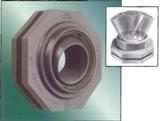
Spec sheets: PVC bulkhead fittings (PDF) Self-aligning bulkheads (PDF) Bulkhead overview (PDF)
Flanged connections
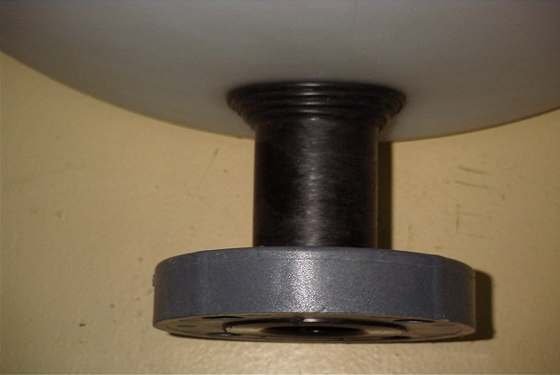
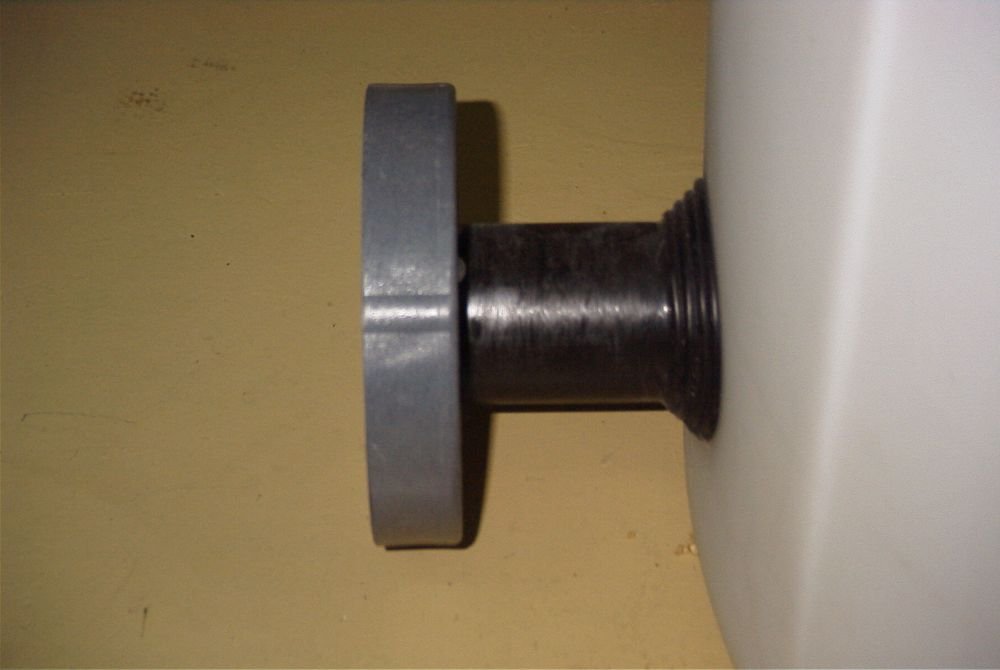
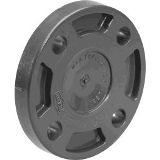
Flanged outlets use the ANSI B16.5 Class 150 bolt pattern, so they bolt straight to standard pipe flanges and valves. We supply PVC and CPVC bulkhead flanges, van stone (loose-ring) flanges and bolted double flanges.
Installing a PVC flange
- Use a full-face elastomeric gasket, ⅛″ thick, 50–70 Shore A hardness.
- Lubricate the bolt threads, make sure nuts run freely, and use full-size flat washers under bolts and nuts.
- Tighten in a criss-cross (star) pattern to the torque below. Over-tightening cracks plastic flanges.
| Flange size | Bolts | Bolt size | Torque (ft-lb) |
|---|---|---|---|
| ½″ – 1½″ | 4 | ½″-13 | 15–20 |
| 2″ – 3″ | 4 | ⅝″-11 | 20–30 |
| 4″ | 8 | ⅝″-11 | 20–30 |
| 6″ – 8″ | 8 | ¾″-10 | 33–50 |
Spec sheets: PVC bulkhead flange (PDF) CPVC bulkhead flange (PDF) PVC bolted double flanges (PDF) CPVC bolted double flanges (PDF)
Valves
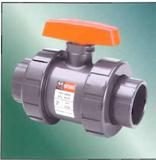

True-union ball valves are our standard shut-off on tank outlets and fill lines. The two union nuts let you lift the valve out for service or replacement without cutting the pipe. We also install ball check valves (to stop backflow on fill lines), foot valves and compact ball valves, in PVC or CPVC to match the rest of the piping.
Spec sheets: PVC true-union ball valves (PDF) CPVC true-union ball valves (PDF) Tank valves overview (PDF)
Elbows and pipe fittings
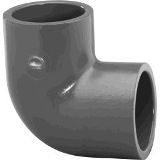
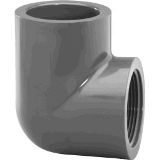
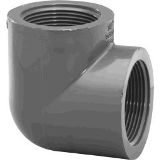
Most PVC and CPVC elbows, tees, couplings, adapters and valves come in three end combinations. Which one we use depends on what the fitting connects to and whether that joint will ever need to come apart.
| Ends | What it means | When it is the right choice |
|---|---|---|
| S x S socket x socket | Both ends are solvent-welded to pipe. | Pipe runs that stay put, such as the piping between a bulkhead and a valve or along a fill line. A cemented joint is the strongest and most leak-resistant, and keeps the full pressure rating of the pipe. It cannot be taken apart without cutting, so we pair it with unions or true-union valves where service access is needed. |
| S x T socket x thread | One end solvent-welded, one end threaded (NPT). | The transition from welded pipe to a threaded part: a threaded bulkhead, valve, gauge, camlock adapter, pump or metal fitting. The pipe side stays cemented and strong, and the threaded part can still be unscrewed. |
| T x T thread x thread | Both ends threaded. | Short connections between two threaded parts, and joints that need to come apart for service or be assembled where cement cannot be used. Threading removes wall, so a threaded PVC joint is rated at about half the pressure of plain pipe, and only Schedule 80 or heavier should be threaded. We use T x T where pressure is low or the joint must be removable. |
We solvent-weld socket joints with primer and heavy-bodied cement. On threaded joints we use a thread sealant rather than PTFE tape, because tape compressed between plastic threads can deform the joint and crack a female fitting.
Top fill lines
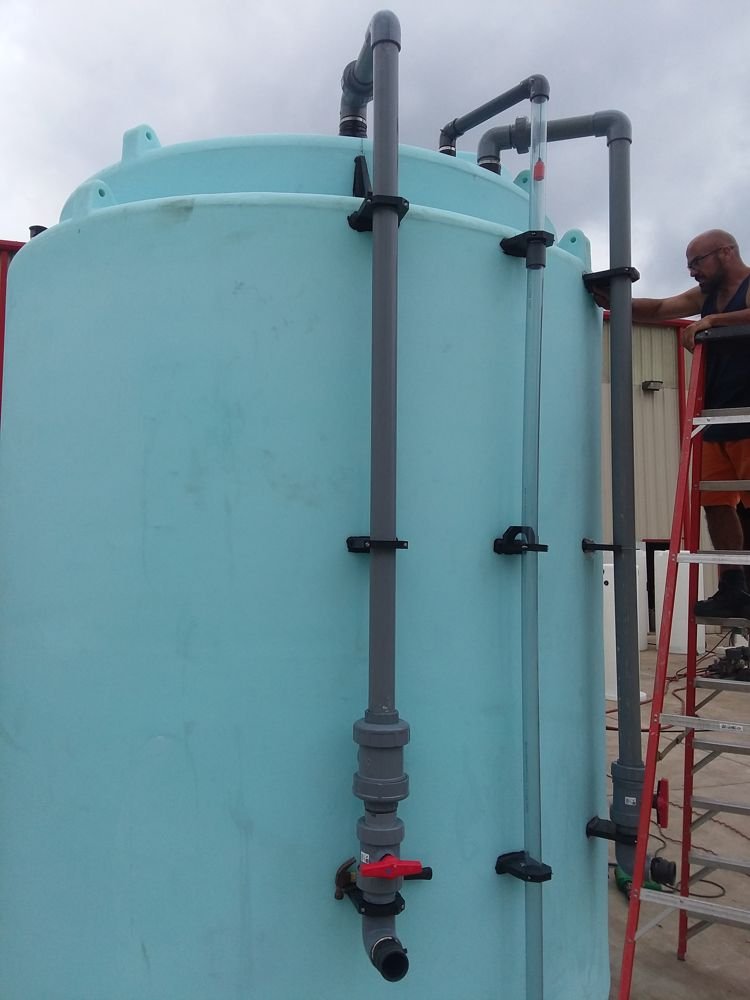
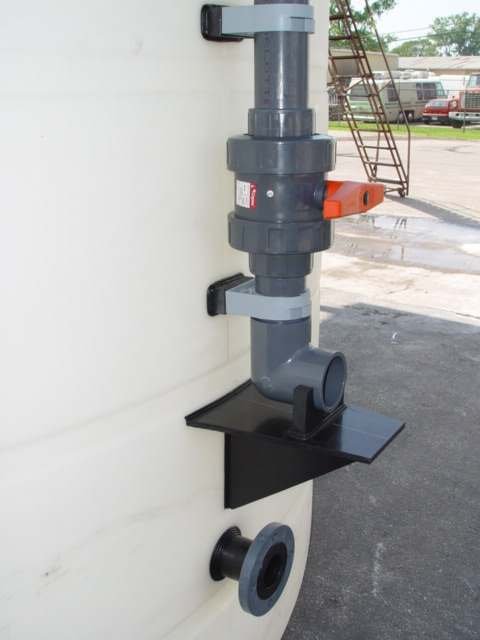
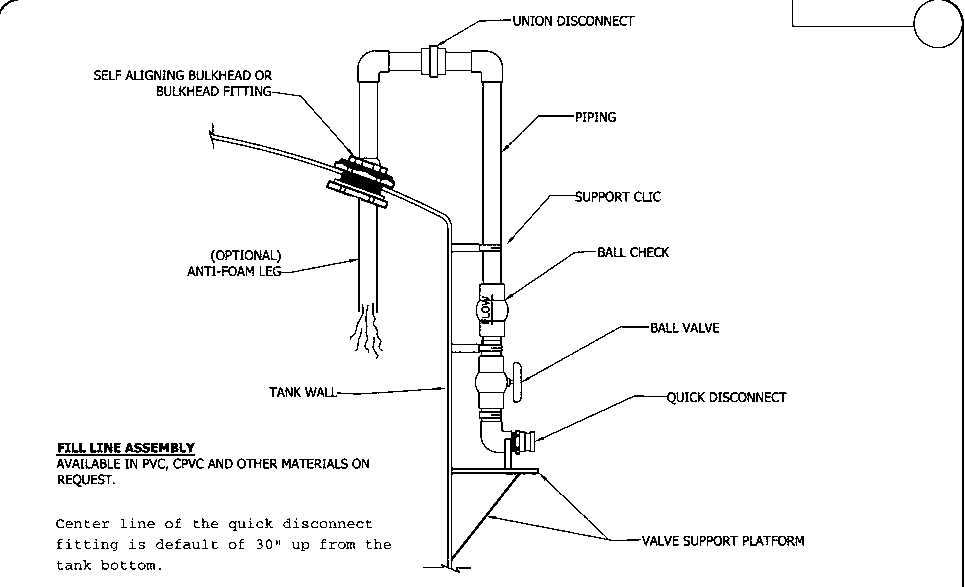
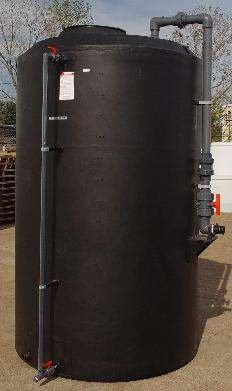
A top fill line brings the fill connection down the side of the tank to working height while the pipe enters through the top, so there is no fitting through the sidewall. A standard assembly has:
- a self-aligning bulkhead on the dome, with an optional anti-foam leg inside the tank;
- a union disconnect at the top and pipe supports welded to the tank;
- a ball check valve and a ball valve;
- a quick-disconnect connection (usually a camlock) on a valve support platform, centered 30″ above the tank bottom unless you need another height.
Fill lines are available in PVC, CPVC and other materials on request. More about top fill lines · Top fill line spec sheet (PDF)
Sight gauges
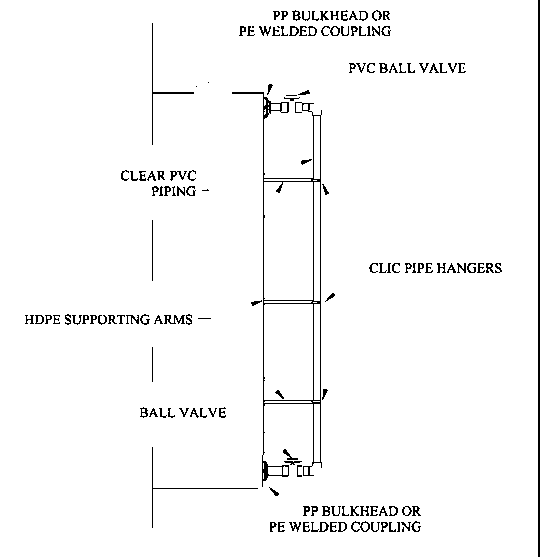
A sight gauge shows the liquid level at a glance. Ours run a clear PVC tube down the outside of the tank, with a PVC ball valve at the top and bottom so the gauge can be isolated or drained. The tube connects through a polypropylene bulkhead or a welded polyethylene coupling and is held by HDPE support arms and pipe hangers.
Sight gauges come in ½″ to 3″ tubing and fittings; other sizes are available. Sight gauge spec sheet (PDF)
U-vents
Vents are the one place we do not use Schedule 80. Our U-vents are made from DWV (drain, waste and vent) PVC, which is lightweight and well suited to vents because a vent line carries no pressure. Every U-vent we install is screened. How we size tank vents
Need a tank plumbed for your system?
Tell us the chemical, temperature and connections you need, and we will quote the tank with the fittings installed. Request a quote · dmiller@plasticstoragetanks.com
Flange gasket, bolt and torque data and the thread sealant guidance are from the LASCO Fittings Schedule 80 PVC catalog; the threaded-joint pressure reduction is from the GF Piping Systems PVC Schedule 80 pipe specification (flanges to ANSI B16.5 Class 150; recommended working pressure 150 psi at 73°F). Always follow the manufacturer’s data for the specific fitting.