Fittings & Options · Double wall
Options for Double Wall Tanks
A double wall tank is a tank inside a tank: if the inner (primary) tank leaks, the outer (secondary) tank holds the liquid. These options keep that containment intact and tell you when the inner tank has a problem.
| Option | What it does |
|---|---|
| Interstitial leak detector | Sounds an alarm if liquid gets into the space between the walls. |
| Top fill and top drain lines | Fill and empty the tank through the top, with no hole in either wall below the liquid. Recommended for double wall tanks. |
| Expansion joint outlets | Sidewall outlets that let the inner and outer tanks move independently. |
| Interstitial hose transfer fitting | Connects an inner-tank outlet to the outer wall through a hose, so the fittings do not have to line up. |
| Through-wall couplings and fittings | Welded couplings and PVC or CPVC fittings that pass through both walls. |
Interstitial leak detector
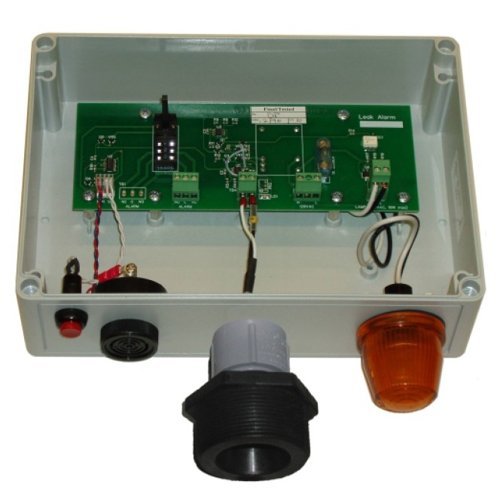
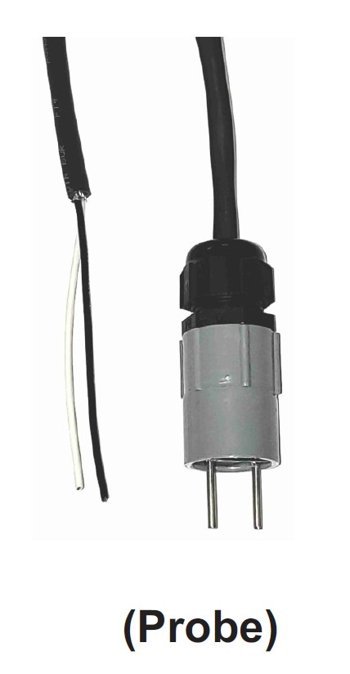
An interstitial leak detector warns you when the primary tank of a double wall tank leaks. A probe hangs to the bottom of the space between the inner and outer tanks; when it touches liquid, the detector sounds a horn, flashes a red strobe and can signal your control system. It mounts on a 2″ NPT fitting on top of the secondary tank, so nothing passes through the primary tank.
- Early warning: finds a primary tank leak while the outer tank still holds the liquid.
- Fail-safe probe: the system checks the probe constantly and alarms if it fails or is disconnected.
- All-PVC probe: potted conductance probe that can be fully submerged.
- Sound and light: 95 dB horn with a silence button and a flashing red strobe on the box.
- Ties into your system: optional relay output for a PLC, control system or auto-dialer.
- Simple install: connect power and the probe. It also works as a stand-alone high level alarm.
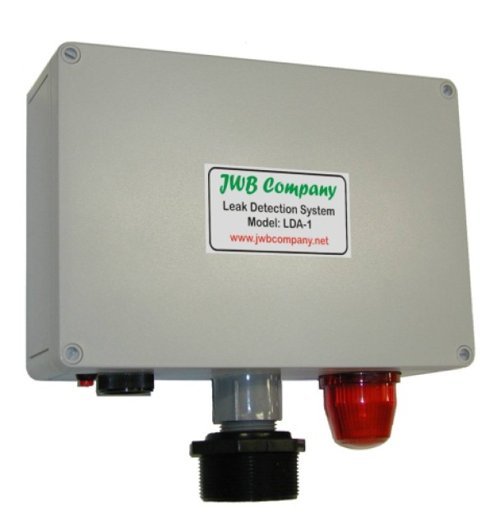
| Model | JWB Company LDA-1 Leakminder |
|---|---|
| Power | 110 VAC (24 VDC optional), under 1 A |
| Enclosure | NEMA 4X, 10″ x 7″ x 3.5″ |
| Probe and cable | Conductance type, all PVC, 19 ft cable |
| Alarms | 95 dB horn with silence; red strobe |
| Relay (optional) | Form C, NO/NC, 5 A at 120 VAC |
| Connection | 2″ NPT with cable grip or conduit |
| Options | UL approved version; relay output; 24 VDC power |
| Warranty | One year from the manufacturer |
Expansion joint outlets
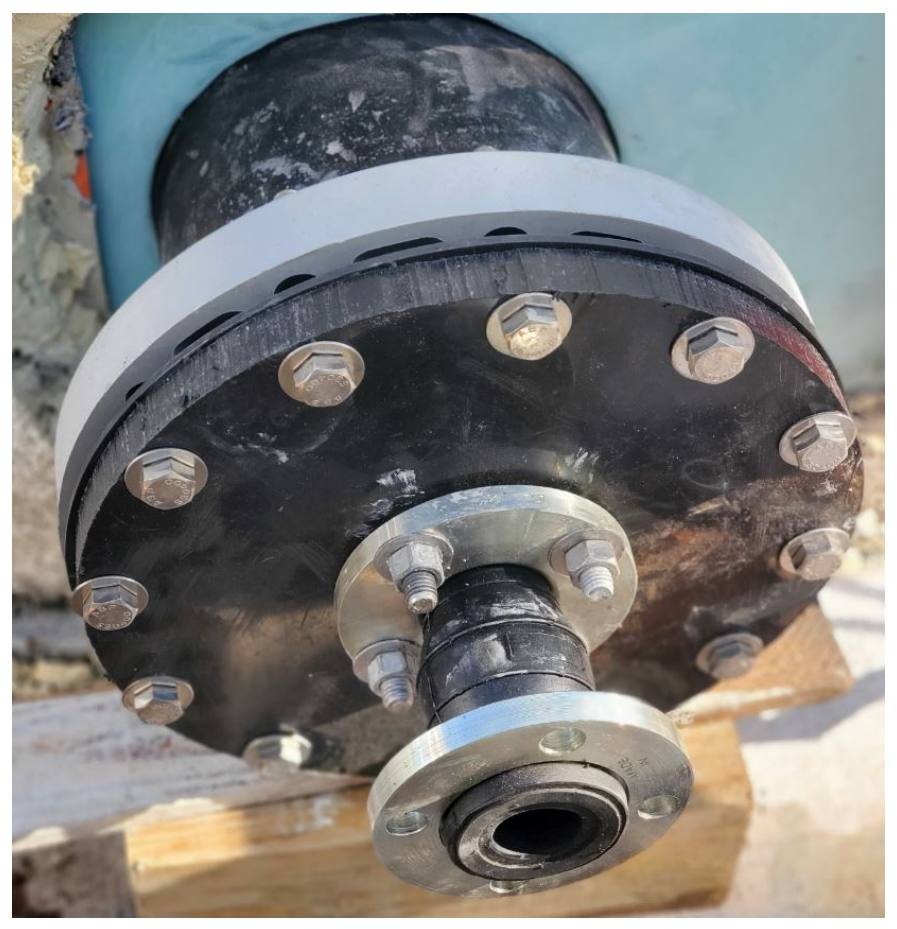
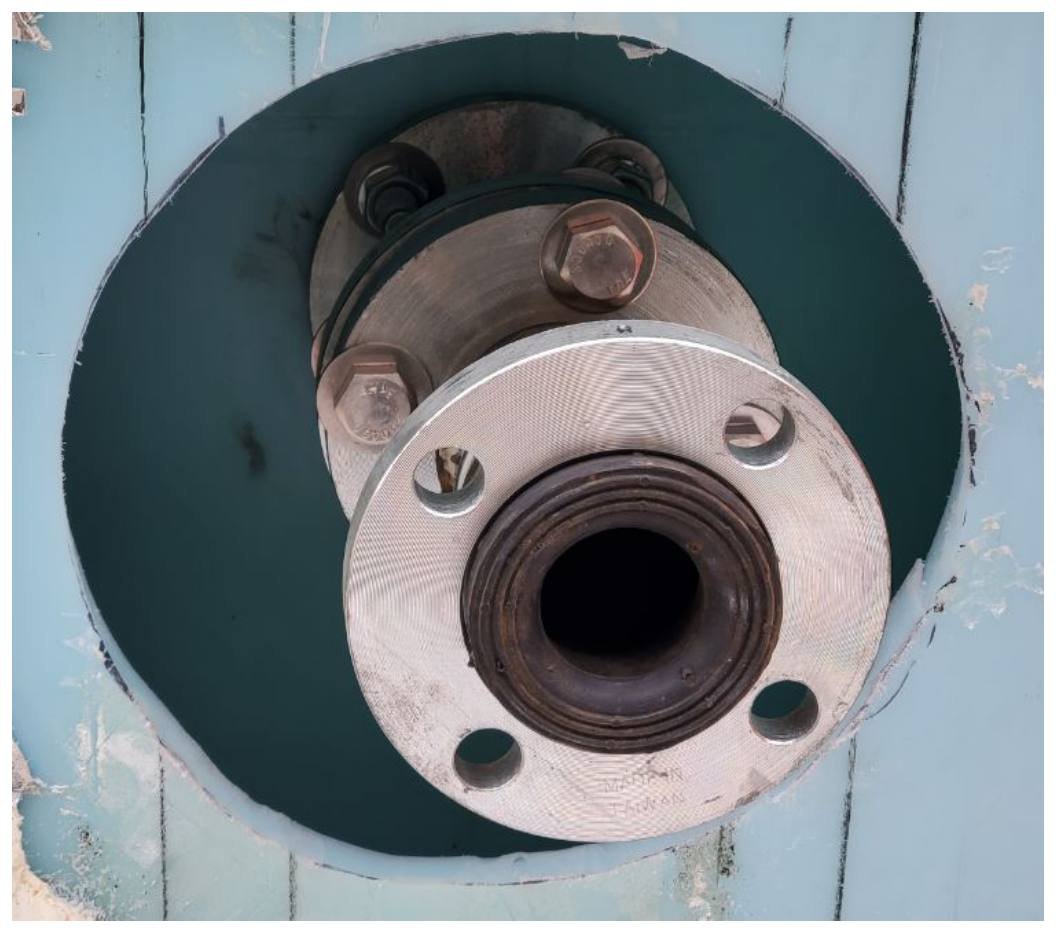
The inner and outer tanks of a double wall tank move a little differently as they fill, empty and change temperature, so a sidewall outlet that is rigid through both walls can be strained. An expansion joint between the two walls takes up that movement.
When the space between the primary and secondary walls is too small for the length of the expansion joint, we add a welded flange to the outer tank and extend it to whatever length is needed to meet the face of the expansion joint. A blind flange or HDPE bolted cover is attached to the welded flange, and a bolted double flange is attached on the outside.
Interstitial hose transfer fitting
Another way to bring a sidewall outlet through both walls is a hose transfer fitting. A bulkhead and elbow on the inner tank connect to a short hose in the space between the walls, which runs to an outlet fitting on the outer wall. Because the hose bends, the inner and outer fittings do not have to line up, and the two tanks can move without straining the connection.

Hose transfer fitting drawing (PDF)
Shop double wall tanks · Level indicators
Planning a double wall tank?
Tell us the chemical and how the tank will be filled and emptied, and we will lay out the fittings to keep both walls intact. Request a quote · dmiller@plasticstoragetanks.com